Search This Blog

Saturday, April 24, 2010

Fooled by Randomness

By Nassim Taleb.

I originally picked up the Black Swan a year or so ago, found Taleb's writing style difficult and put it down. I came across a reference to Taleb again recently and decided to try Fooled by Randomness. Again, the style is difficult - I personally think he would have benefitted by having a rigorous editor (like a lawyer - though I get the feeling that suggestion would horrify him). I keep feeling like he is dancing around the point in each paragraph instead of just saying it. That's not totally fair, it is not every paragraph, just a lot of them.

His idea that there is a lot of randomness in the world is well taken (as is his point that no one who is successful wants to attribute any of it to randomness).

Pretty well done review here and another here.

I am still reading it, so I will have more to say later.

Taleb's homepage here.

Buy it here.

The Big Short

By Michael Lewis.

I loved Liar's Poker when I read it years ago and was also impressed by The Big Short. I will probably have to read it again to make sure I got the whole story - hazard of reading quickly when I don't have a lot of background in the subject, I have found. Easy to read, but I think I needed some diagrams - I am very visual and descriptions of relationships are harder for me than diagrams sometimes. I am going to diagram it myself, I think. If I do, I will post them. I would recommend.

Reviews: B&N, NY Times, and The AV Club.

Interesting back story here.

Buy it here.

5 out of 5 stars.

Economics Without Illusions


By Joseph Heath.

Apparently, I randomly picked up a book that others are actually reading: see the proof here.

I like the idea of the book - debunking crappy arguments on both sides of the political fence, not just the side you are not on.

I found the book difficult, I think because I have little to no background in the topic. I was and am willing to hear arguments against what I currently believe, and I am willing to be convinced, but they better be good arguments and not leave anything out. I found my self wanting to argue directly with the author because I found he sometimes didn't address a point I thought was important.

For example, in chapter 8, he states that the Left fails to appreciate corporations real motives for their actions preferring to blame them on the "profit motive." This is a failing because the Left does not check to see if the earnings are actually paid out as profits, which he defines as dividends. He brushes off in passing the pressure to maximize share price - dividends are less important to most investors I know, while share price is hugely important. This is still "profit" for both the shareholders and the employees/officers/directors of a company that hold stock options. I wish he had more fully addressed this issue because there may be some counter to my view that I have not thought of.

My favorite part of the book, by far, is the [fairly short] section where he discusses evolution. In chapter 1, he points out "[s]ometimes the competition for survival results in outcomes that are highly adaptive . . . but sometimes the results are highly maladaptive." I found his explanation of competition within the species itself (for mates), as opposed to between species (for food, shelter, etc.), fascinating. Using peacocks as an example, he explains that the pressure to compete for mates encourages the development of lengthy tailfeathers in peacocks. However, the longer the feathers, the more energy is expended in growing them and the more difficult it is to fly and escape predators. The males with the longest feathers are least likely to survive to maturity, but are most likely to mate if they do survive. The offspring of those males will have long tailfeathers and will therefore be less likely to survive (but more likely to reproduce if the do). This ultimately means that fewer and fewer of the peacocks will survive, leading possibly to the extinction of the species! The point is that "adaptations that are 'good for the individual' are not necessarily 'good for the species' at all. Individuals cannot be counted upon to do what is necessary to promote their own interests as a group." This is the most cogent explanation I have seen for something that seems from experience to be true.

I also found interesting his explanation that we can only import goods if we have some way to pay for them. We pay in our currency (of course), which must then be spent on some good or service provided in or by our country (or exchanged with someone else who has to spend it in our country). If China doesn't want our currency (ie our good or services), it will not trade with us. Therefore, trading with China creates jobs here! I have to think this through more because something seems fishy about the explanation. On the surface, it makes sense, but standing back from it, something just seems fishy.

The author provides a good explanation of how it works by quoting David Friedman's Iowa car crop parable: There are two ways for Americans to produce automobiles: they can build them in Detroit, or they can grow them in Iowa. Growing them in Iowa makes use of a special technology that turns wheat into Toyotas: simply put the wheat onto ships and send them out into the Pacific Ocean. The ships come back a short while later with Toyotas on them. The technology used to turn wheat into Toyotas out in the Pacific is called "Japan," but it could just as easily be a futuristic biofactory floating off the coast of Hawaii. Either way, auto workers in Detroit are in direct competition with farmers in Iowa.

I understand the first part, but I am not as clear about the last sentence. I understand it on a superficial level, but it seems to imply that Detroit is only in competition with Iowa. I don't think that is right. Detroit is also still in competition with Japan, I think. Any of the three of those places could hit on a vast improvement in production and leap ahead to the detriment of one of the others (Detroit makes cars cheaper, then people buy them from Detroit and Iowa and Japan both suffer; Iowa makes wheat cheaper, then Japanese cars become cheaper in the US and Detroit suffers; Japan makes cars cheaper, then Detroit and Iowa suffer (I think - but his theory suggests that only Detroit suffers)).

Part of my problem with the book may be that I think economics has limited use in explaining people. Everything in economics seems to start with "in an ideal world..." or "ignoring this [hugely variable] factor...". This just automatically makes me downgrade the importance of the "discoveries" made by economists.

Buy it here.

4 out of 5 stars

Tuesday, March 23, 2010

Second Nature

Michael Pollan's Second Nature is enjoyable, as all his books are. I find myself agreeing with him mostly, but some things just don't sit well. I am still in the middle of it, so I will write more when I am done.

Buy it here.

Update: I put it aside. I will probably get back to it at some point, but have been taken over by interest in monetary things...

Bleak House


I am slowly reading Bleak House by Charles Dickens. I really like it and like his style much more now than I did when I was younger, but it is a time-consuming book.

I will post more when I have finished.

Update: I did finish Bleak House a little while ago. I really enjoyed it - I have rarely or never encountered a book that took me so long to read that kept my interest. I can't believe how much I enjoyed his descriptions. His character development is also great. Seems cliche to say all this about Dickens, I guess. I was just kind of surprised at how much I enjoyed it.

Buy it here.

5 out of 5 stars.

Gaia's Garden


Well, it has been way too long since I read much of anything. My office had a trial and it seemed to take over my life!

I have managed to read Gaia's Garden, by Toby Hemenway. Of course, it made me want to give it all up and become a farmer (though it seems that most things make me want to give it all up and become a farmer...). Very inspiring and lots of good information. I still think I need some help in overall garden design to make everything work well on my small lot, but he inspired me to make some small changes this year and see how the garden grows.

Reviews: from Organic Gardens here and from GoodReads here.

Buy it here.

5 stars.

Thursday, February 4, 2010


That Old Cape Magic. Really enjoyable read. He creates very believable main characters and funny supporting characters. The story is definitely depressing for someone who is in mid-life and has been married for 10 years.

Reviews from the NY Times and the Washington Post.

Buy it here.

Wednesday, February 3, 2010

DRiVE. By Daniel H. Pink. I swear I know his name from somewhere, but none of the other things he has written ring a bell. Anyway, I like this although I feel like it could have been shorter - he is repetitive sometimes. Specific comments:

P 27: discussion of the famous experiment where one participant is given ten dollars and told he must divide it however he wants with another participant. If the 2nd participant accepts the division, they both keep their share of the money. If the 2nd participant does not accept, then neither one keeps anything.

The "rational" thing to do as the 2nd participant is to accept any amount - something is better than nothing. However, that is not what happened: generally, if offered $2 or less (20%), the 2nd participant rejected the offer.

My take:

(1) $10 is not necessarily enough to make a broad statement about actions - would it make a difference if the amount was 20% of $100,000 ($20,000)? Probably. So, possibly only when the amount is de minimus would this behavior be seen. The same problem may arise if the 2nd participant is very poor - and to whom no amount is de minimus. Would that person give up any amount? Probably not. Thus the problems with enforcing a contract "negotiated" between parties with very different resources. Be careful when interpreting the results of this experiment.

(2) The outcome of the experiment is only confounding to economists when you only look at the individual in isolation. Yes, an individual is individually economically better off with $2 rather than no dollars. However, humans have a drive to protect the group, not just the individual (once certain basic needs are met). If you take that group-preservation theory, then punishing someone for being greedy (the 1st participant trying to keep much more for himself) makes sense. The small amount that participant 2 is giving up is not as painful as the big amount that participant 1 is giving up - and that will encourage participant 1 to be more generous in the future, thus benefiting the group in the future.

P 36 et seq.: discussing what happens when you provide external rewards as "motivator" - you lose any internal motivation. In other words, you care less about the work, you only care about the reward.

My take:

Isn't this exactly what happens with big CEOs (and others below them rewarded in similar fashion)? They don't give a crap about the company, they only care about their bonus/options/retirement/etc. By giving them these bonuses, we are virtually guaranteeing that the long-term health of the company will not be a priority.

P 115:
Regarding "flow": what relationship does this concept of "flow" have with walking or working meditation - where you are totally focused on your task at the moment?


Reviews? Apparently not really reviewed as a general interest book, but only as a business book, thus: Small Business Trends & Harvard Business Review.

Buy it here.

3 stars: 4 for interest, 2 for writing.

The Good Thief. Another slightly more violent book than I would have liked, but good. Kept me going. Perhaps my social stripe in some ways: don't be conventional, conventional bad (makes you crazy), unconventional good (though you might die or get beat up, at least you are interesting and sane). On the other hand, I'm not a big believer in just looking out for yourself and perhaps one or two others you consider family as this book seems to push in some ways. Anyway, I enjoyed it, but wouldn't necessarily recommend it to someone who is not a very fast reader (there are other books I would recommend first).

3 out of 5 stars.

Thursday, January 28, 2010

Kindle v. Nook v. iPad. Decisions, decisions - the Kindle has a great screen and is out of the first generation already, but only reads Kindle books. The nook reads open format books, but books look a little more expensive, the sharing capability is very limited and the first generation bugs are still there. The iPad uses backlighting which is tiring on the eyes, but also can have color pictures. None of them are perfect for me. And besides, I always wanted to be a book-binder, so how can I move over to electronics. (Well, actually our house is so small, it really does make sense for me....)


De Bono's Thinking Course. This is a book I originally picked up years and years ago. I have read it a few times over the years and still find it really interesting. De Bono is an interesting writer - I read another book by him and couldn't get far (I Am Right, You Are Wrong). I think he needed serious editing, but maybe I was too young? I might try again. Anyway, the Thinking Course is well edited and easy to read. I have wanted to set up a "thinking club" for years after reading his suggestions - and I am starting one in Denver! I find it a very practical guide to improving my thinking.

De Bono's website is just "off" enough to seem strange. Check it out here.

5 stars out of 5.

(Couldn't find an image of the Thinking Course book to use in this post.) Buy it here.


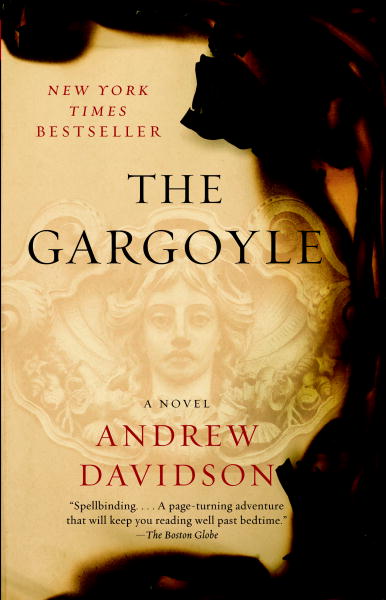
The Gargoyle: Just finished The Gargoyle last night. Starts off rough and remains violent off and on throughout, but kept me reading. Liked the imagery. One of those "love through the ages" romances. Interesting characters, but perhaps too overblown.

4 stars out of 5.

NYTimes reviews here and here.

Buy it here.